Surface Differences
Analyzing the functional and visual impact of surface texture variations in molding and printing.
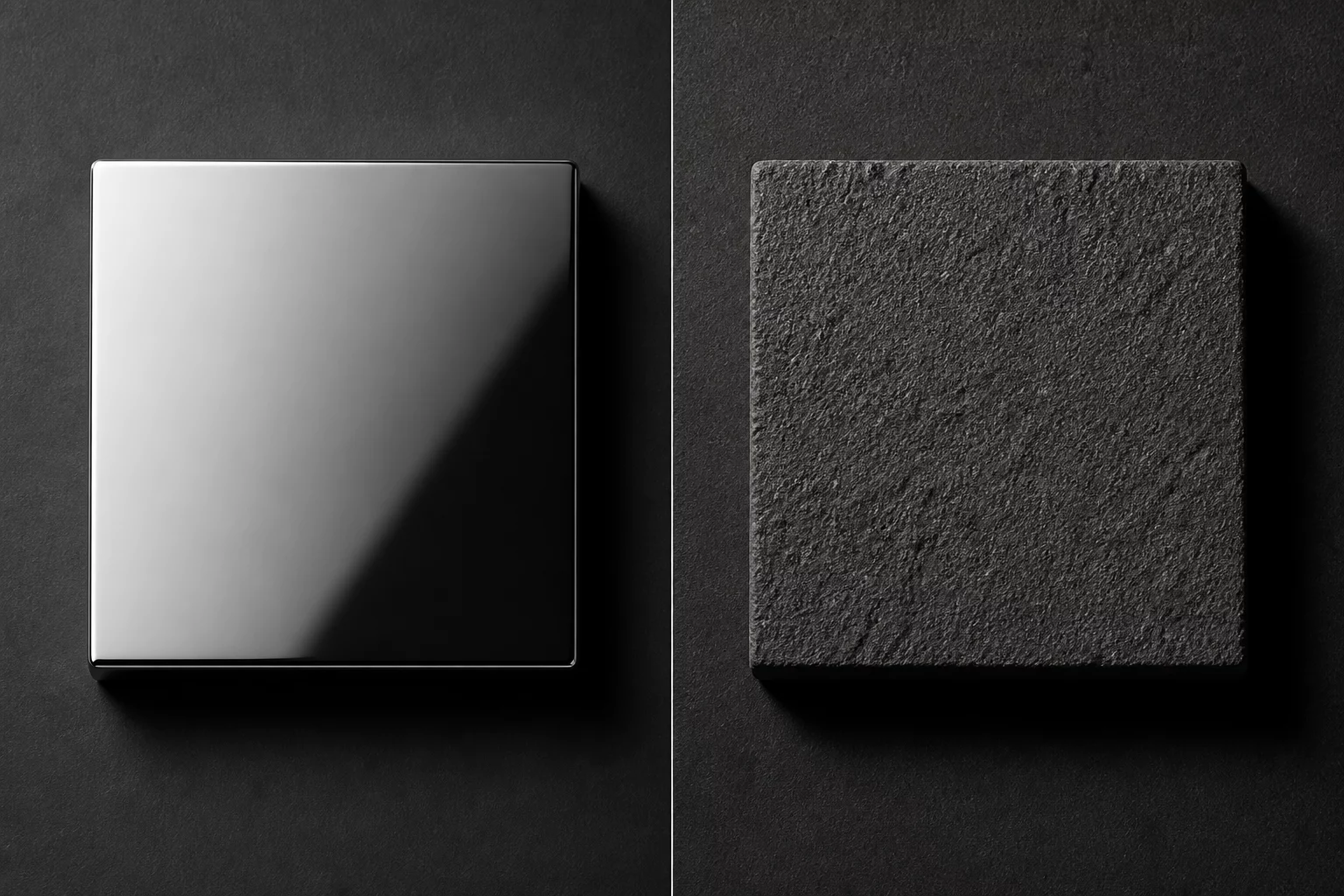
In high-precision manufacturing, the surface finish of a component is rarely just an aesthetic choice. It directly influences tactile feel, friction coefficients, light reflection, and how parts fit together. Our team set out to measure the boundary where cosmetic surface variations cross into functional defects, using controlled batch trials to establish clear tolerance limits for our design team.
Overview & Objective
Surface differences often arise from minor temperature fluctuations in mold cavities or slight layer cooling speed variations in additive manufacturing. During our recent production run, we observed that while parts remained within their physical dimension limits, their outer textures differed noticeably. One batch had a semi-gloss sheen, while the next run showed a matte, slightly textured surface. We needed to understand if this variation would affect wear resistance over time or interfere with optical sensor detection on the assembly line.
Consistency is not about making every surface perfectly identical under a microscope; it is about ensuring that the inevitable variations do not impair functional performance.
— Rachel Adams, Technical Lead
Implementation & Methodology
We subjected two groups of parts—one with smooth, glossier surfaces and one with matte, textured surfaces—to standardized mechanical stress and friction testing. Using an automated wear tester, we measured surface degradation over ten thousand cycles. Interestingly, the textured components demonstrated a lower initial friction coefficient when paired with POM brackets, but wore down slightly faster than their polished counterparts. We also conducted assembly trials with automated robotic pick-and-place equipment to verify that surface reflections did not confuse the visual sensors.
Key Takeaways & Lessons
The trials provided clear guidelines for our quality control protocol. First, cosmetic variations within a defined gloss range do not compromise the structural integrity or dimensional fit of the parts. Second, visual sensors require calibration with a wider reflectance threshold to prevent false rejections. By establishing these surface finish baselines, the team can confidently accept minor aesthetic deviations without risking product failure, saving substantial time in post-processing.
Discussion & Input
Kevin Harris
2026-07-02Surface finish impacts user perception heavily.
streamAdd Your Analysis