Long Term Stability Of Printed Parts
How environmental cycles, material selection, and infill geometry affect structural performance over extended lifespans.
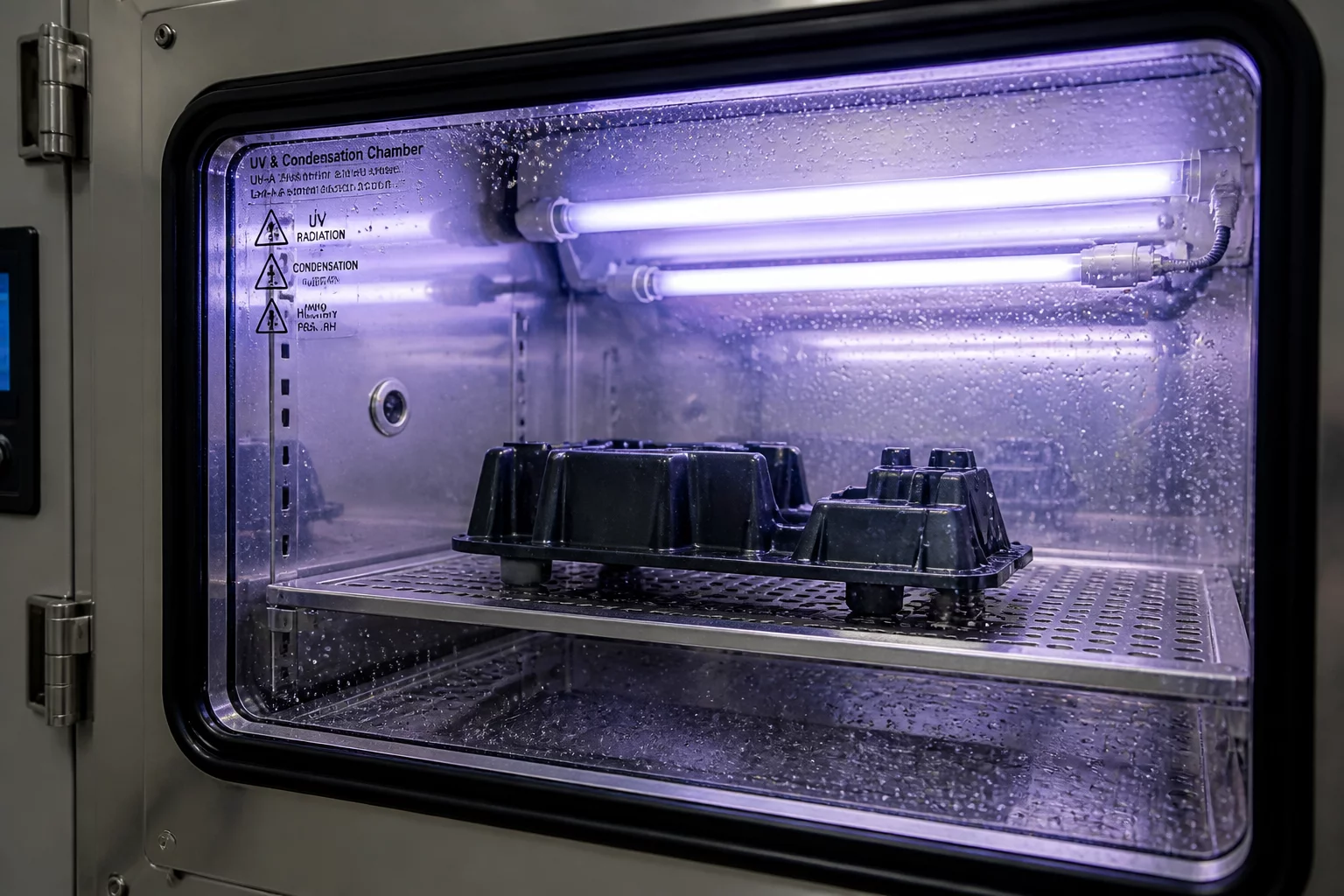
Ensuring the long-term structural integrity of additive manufacturing components remains a critical hurdle for real-world deployments. Over extended lifespans, polymers are subjected to varying temperatures, mechanical fatigue, and chemical exposure, which can degrade their initial mechanical properties. Our engineering team launched a year-long investigation to determine exactly how different materials behave under sustained stress and environmental loading.
Overview & Objective
The primary objective of this research was to quantify the degradation rate of functional printed parts in outdoor and high-humidity environments. We focused on standard thermoplastics such as PETG, ASA, and engineering-grade polycarbonates. By establishing precise baselines for tensile strength and dimensional retention, the project aimed to define clear operational lifespans. We subjected fifty test specimens to continuous loading inside controlled environmental chambers, simulating five years of field use through accelerated aging cycles.
Predicting how a printed part behaves after thousands of hours of service is the difference between prototype success and production failure.
— Sophia Patel, Technical Lead
Implementation & Methodology
We implemented a rigorous multi-stage testing protocol. First, we fabricated the test batches using standardized extrusion parameters in a controlled room to eliminate ambient print-time variables. Next, the components were loaded into an environmental chamber where we cycled the humidity from 10% to 90% and temperatures from -20В°C to 70В°C. We measured dimensional deviations daily using precision digital calipers and conducted ultrasonic non-destructive testing weekly to detect internal micro-fractures before they reached the surface.
Key Takeaways & Lessons
Our findings revealed that material selection is only half the battle. ASA specimens retained over 85% of their tensile strength and showed virtually zero degradation from UV light exposure, while PETG experienced minor embrittlement under continuous load. Crucially, the internal infill pattern heavily influenced the breakdown rate. Gyroid infill configurations distributed internal stresses far more evenly than grid patterns, preventing premature failure. Designers must prioritize infill geometry and layer adhesion over simple wall thickness to ensure long-term stability.
Discussion & Input
Add Your Analysis