A Stable Fit With Inconsistent Appearance
How two interlocking elements achieved structural harmony despite distinct surface finishes.
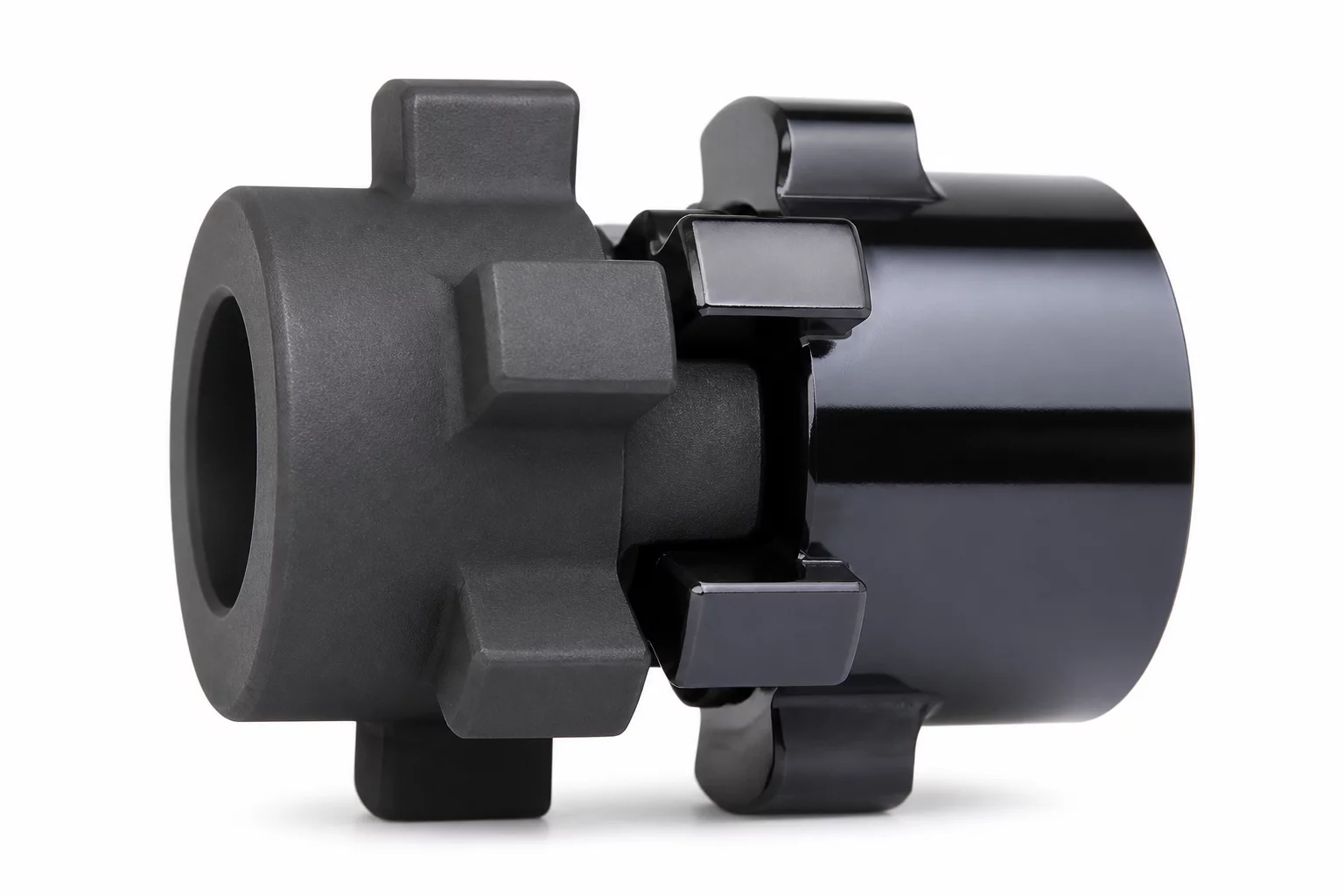
In manufacturing, visual consistency does not always align with mechanical precision. This case study details how two critical interlocking components maintained an exceptionally stable fit even when variations in color and texture created an inconsistent appearance.
Overview & Objective
Our primary objective was to evaluate the mechanical integrity of 3D printed interlocking parts under real-world usage. During a routine production run of mechanical housings, the assembly team noticed a clear visual disparity: the male adapter had a semi-gloss sheen with a slightly darker grey hue, while the female coupling had a matte, lighter grey surface. Despite this aesthetic mismatch, initial sliding tests indicated that the fit was remarkably snug and within the original engineering specifications. We needed to verify if this cosmetic inconsistency masked deeper dimensional defects or if the parts could be safely accepted for final integration.
Aesthetic uniformity is a desirable goal, but functional repeatability must take precedence in mechanical systems. When the clearances are met, a color deviation is merely a visual characteristic rather than a defect.
— Marcus Wright, Technical Lead
Implementation & Methodology
We conducted a series of precise coordinate measurements on ten sample assemblies using digital calipers and plug gauges. The tests revealed that the dimensional variation between the matte and gloss components did not exceed 0.03mm, which is well within our 0.05mm tolerance threshold. The surface texture differences were traced back to a minor temperature fluctuation on the build plate during the print process, which modified the layer bonding appearance but left the structural geometry intact. We then implemented a standardized friction test, simulating 500 insertion cycles to confirm that the variation in surface roughness did not accelerate wear or cause binding.
Key Takeaways & Lessons
The evaluation proved that visual defects do not automatically equate to structural failures. The team learned to separate cosmetic acceptance criteria from functional clearance limits. To prevent future cosmetic deviations, we stabilized the ambient build chamber temperature and updated our slicing profile. However, this case reinforced the importance of practical testing over purely visual inspections. Parts that look slightly different can still work perfectly together, saving valuable time and reducing unnecessary material waste in small-run production batches.
Discussion & Input
Linda Brown
2026-06-26Assembly tolerances are often misunderstood. Great case.
streamAdd Your Analysis